Long abandoned due to armed clashes, the risk of crossfire, and repeated flooding affecting the entire area, the facility reopened in October 2025 with the support of ALIMA, in partnership with the Ministry of Public Health and Population.
The CHAPI Hospital had suffered extensive damage. Rainwater had repeatedly flooded the ground floor, rendering several essential parts of the facility unusable. To ensure a rapid and sustainable return to activity, ALIMA chose to rehabilitate the building starting from the second floor, the area least exposed to flooding.

“The community deeply needed the CHAPI Hospital,” says Dr. Ducloseille Boaz, the hospital’s Medical Director.
“For years, people were forced to travel long distances to receive care. Pregnant women, malnourished children, injured people… many simply couldn’t make it,” he adds.
Accessible Healthcare in an Isolated Area
Since the official reopening on October 13, 2025, patients have been arriving in mass.
“Every morning, patients arrive very early. Children, adults, pregnant women, every group is represented. This reopening is a dream come true for many families,” the doctor continues.
Medical activities began on October 13 with outpatient consultations and hospital admissions. The center is now open every day, providing a permanent medical presence in a neighborhood where healthcare services are scarce.
ALIMA supported the center’s rehabilitation, the deployment of doctors, nurses, and midwives, as well as the supply of essential medicines.
“We also have psychologists available every week for those who need them.”
Supporting Women, Ensuring Safe Births
Maternal health was a central concern. Rebecca, a midwife with ALIMA, works daily with pregnant women and young mothers. In Haiti, maternal health remains a major public health issue. The country has one of the highest maternal mortality rates in the Western Hemisphere, with approximately 529 deaths per 100,000 live births. Moreover, only 36% of women give birth in a health facility, exposing the vast majority to high risks of complications and death during pregnancy, childbirth, or the postnatal period.
« J’ai choisi ce métier pour aider les femmes. En Haïti, la mortalité maternelle et néonatale reste très élevée. Beaucoup n’ont pas les moyens d’aller à l’hôpital ou n’ont accès à aucune structure. »

« À CHAPI, nous les suivons pendant la grossesse, après l’accouchement, et nous prenons aussi en charge les nouveau‑nés », explique‑t‑elle.
Every day, she sees the tangible effects of this medical presence. “Some women come every other week because they’re so afraid of not being monitored anywhere else. They say they want to make the most of the care available. When I see their healthy babies, I know that our work truly matters.”
Restoring Trust Among Patients
For women in the neighborhood, CHAPI is much more than a health facility; it is often the only way to access healthcare.
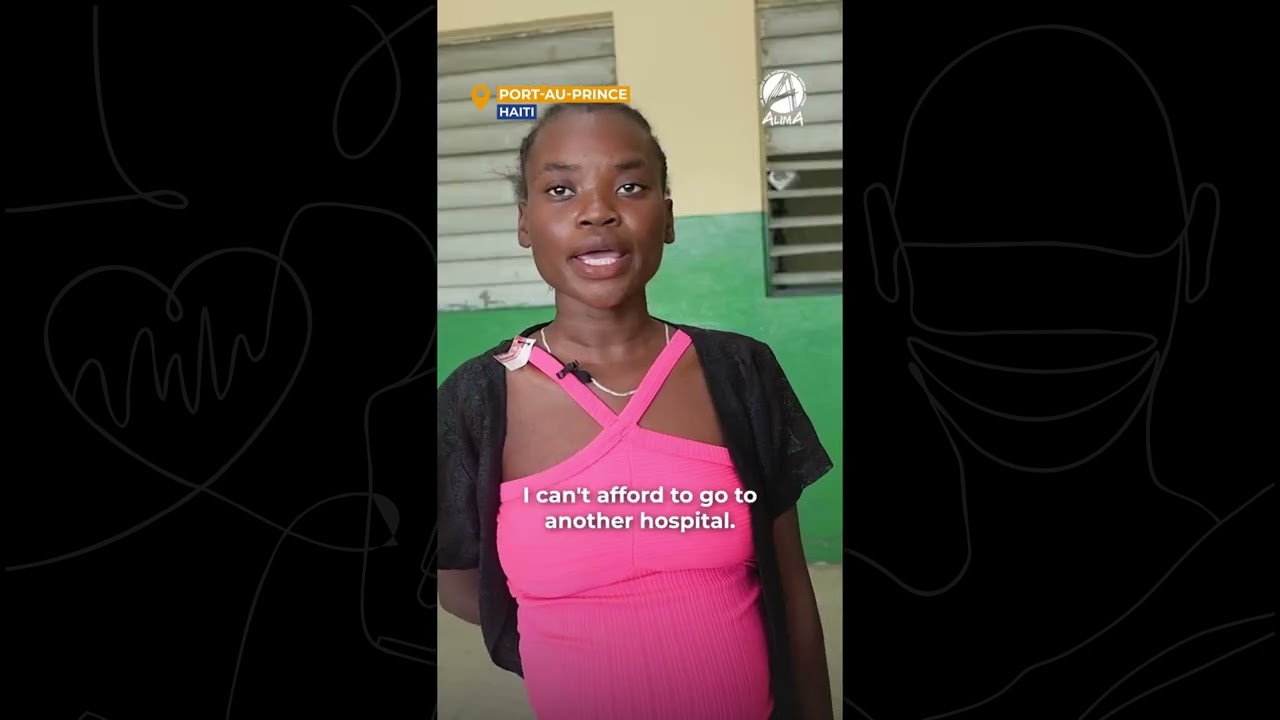
Vanessa Neptune, 24, five months pregnant, is attending her very first prenatal consultation.
“I’ve been suffering from dizziness and anemia since the beginning of my pregnancy.”
Due to a lack of financial resources, Vanessa was unable to go to a hospital. “When I heard about ALIMA at the CHAPI center, I came here right away,” she says.


“The nurse advised me on how to take care of myself during my pregnancy, especially regarding my anemia,” explains the young woman, who is expecting her second child.
A Long-Term Commitment
For ALIMA, the challenge goes beyond immediate emergency response. The goal is to sustainably support health authorities in Haiti in restoring abandoned infrastructure, particularly in areas where insecurity and poverty severely limit access to care.
“If ALIMA hadn’t been there, we would probably still be out of service today,” says Dr. Boaz.
“The Ministry of Public Health and Population supports us, but the needs remain significant. We still lack doctors and resources to open additional services.”
At CHAPI, the gradual resumption of medical activities marks an important step in rebuilding the local healthcare system, which is essential for thousands of people who previously had no hope of receiving care.
With financial support from the European Union (ECHO) and the Crisis and Support Centre (CDCS), and in collaboration with the Ministry of Public Health and Population, ALIMA is now a key healthcare actor, working as close as possible to populations who are too often deprived of access to healthcare.
Photo credits: © Woo-Jerry Mathurin / ALIMA