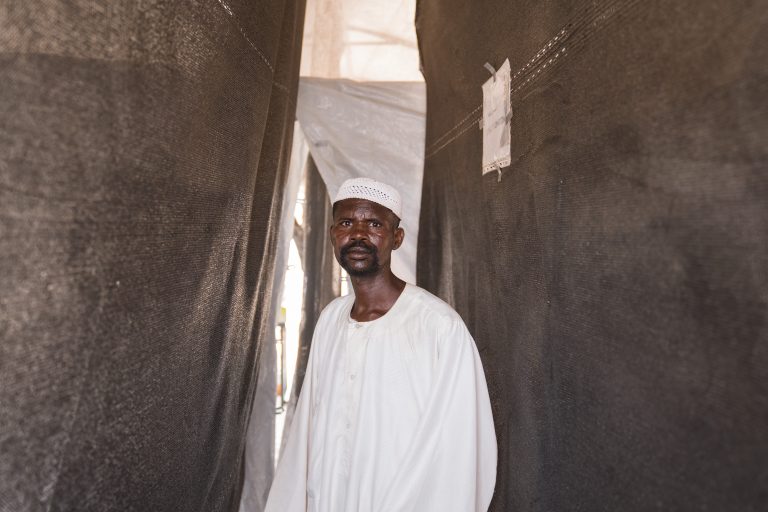
Since March 2020, ALIMA field teams (doctors, health care personnel, national and international researchers) have been working with African and international national health authorities to respond to the COVID-19 crisis.
As soon as vaccines were available, ALIMA quickly partnered with health authorities in eight of the countries where we work to implement COVID-19 vaccination campaigns targeting the most vulnerable people. Despite the many challenges encountered, our teams were able to distribute nearly two million doses within a year and a half.
Read on to discover photographs and stories of our teams.

GOING THE LAST MILE
Welcome to some of the hardest-to-reach areas in the eight countries in Africa where ALIMA has rolled out COVID-19 vaccination activities. For more than a year, we have been supporting ministries of health in Mauritania, Guinea, Nigeria, Central African Republic, Chad, Niger and Mali to reach some of the most vulnerable communities.
To achieve this, ALIMA has developed a strategy that requires significant time and resources, but which has proven very effective: community mobilization and the deployment of mobile teams that travel to villages to meet the most vulnerable and vaccinate them directly on the spot. In this way, the right to health is guaranteed for people who live far away from vaccination centers.

RAISING PUBLIC AWARENESS
Mauritania is a great example, as it has one of the best vaccination rates in sub-Saharan Africa. This is how we set up activities to launch a new campaign in the Bassikounou region:
That day, seven mobile teams met at the Bassikounou health center before moving on to the field. After receiving a general briefing, collecting the vaccines, the necessary equipment and the keys to the cars provided by ALIMA, the health workers set off. Some of them travel for two days in a row to cover as many locations as possible. When they reach their destination, after several hours of travel, they drive around the houses with a loudspeaker to inform the residents that a vaccination session will take place. The nurses talk to the people they meet and explain the situation, offering to meet them at the vaccination point. Once settled there, the team install coolers filled with vaccines, medical records and vaccination cards.
The inhabitants of the village of Lkhleil, who were very reluctant to go and get vaccinated on their own due to lack of information or means, nevertheless flocked by the dozens to receive their COVID-19 vaccine doses. Having confidence in the teams that came to them and reassured by the support of the village chief, over 300 people got vaccinated; people like Abderrahmane Ben Said who presents his vaccination card in the photo above.
Women are a key link to the community, be it in a medical or social role.


“My name is Selkha Mahamoud and I am a community mobilizer with ALIMA for the COVID-19 vaccination campaign. As the president of the Daoudi neighborhood, I chose to get involved with ALIMA because I care about our community and I want to make sure they have access to important information. I want everyone to be aware of the pandemic and to get vaccinated. I do this by going door to door, making phone calls and organizing community meetings. At first, people were wary and didn’t want to hear about it, but now, with time and outreach, they are the ones asking to be vaccinated.”

MOBILIZING THE COMMUNITY
To reach as many people as possible, and to increase vaccination coverage in its areas of intervention, ALIMA is always mindful of local communities’ perception of the vaccine. Rumors, misinformation and various fears can be major obstacles. This is why local spokespersons, such as village chiefs and community mobilizers, are essential to success.
“We are currently in this unique COVID-19 pandemic situation, explains Sassry Mohamed, community mobilization manager for ALIMA. Community mobilization is at the heart of our public health intervention. Communities have the right to be informed of the risks that they and their loved ones are exposed to. Community mobilization is essential for effective communication about these risks in the context of a health crisis.”
In line with the recommendations of the World Health Organization, and ALIMA’s own objectives, it is important to prioritize who needs to be vaccinated, namely, the people who are the most at risk of developing or dying from a severe form of the disease. Elderly persons and people at high risk of death due to chronic conditions such as heart disease or diabetes are therefore particularly targeted by our teams.

SUPPORTING COUNTRIES IN CRISIS
Countries in the Sahel region are currently facing numerous security challenges in addition to climate change, both of which are having an increasingly significant impact on local communities. Population displacements and natural disasters have led to instability and serious food shortages. For the past two years, the COVID-19 crisis has been added to the list of challenges.
In refugee camps, for example, communities are particularly vulnerable. They often live in close proximity in very precarious conditions. It is therefore essential for ALIMA to work in these areas and vaccinate new refugees as soon as they arrive, to prevent a new outbreak.
In addition, countries in crisis sometimes need ALIMA’s support to strengthen their health response to the pandemic because of a lack of resources or personnel. Here are some examples from the Central African Republic, Chad and Mali :
The Central African Republic (photo below on the left) recorded its first case of COVID-19 on March 25, 2020. In May 2021, following the launch of a COVID-19 vaccination campaign by the Ministry of Health, ALIMA committed to providing support in the Bimbo health district. Over 100,000 vaccine doses have been administered by our teams in the country.
In Chad (center photo below), in the Amma IDP site in the Lake region, local communities benefit from a vaccination campaign against COVID-19.
In Mali (photo below on the right), ALIMA and its local partner AMCP-SP (Medical Alliance against Malaria – Population Health) are supporting the Ministry of Health to facilitate the vaccination of vulnerable people. Mariam Dembélé (pictured), who was vaccinated in June 2021, proudly shows her vaccination card after receiving her first dose at the Siribala Community Health Center.


“For people to accept vaccination, it has to be done by people they trust”
Bady Sidi Amar, chairman of a health committee in the M’Berra refugee camp in Mauritania, on the border with Mali.

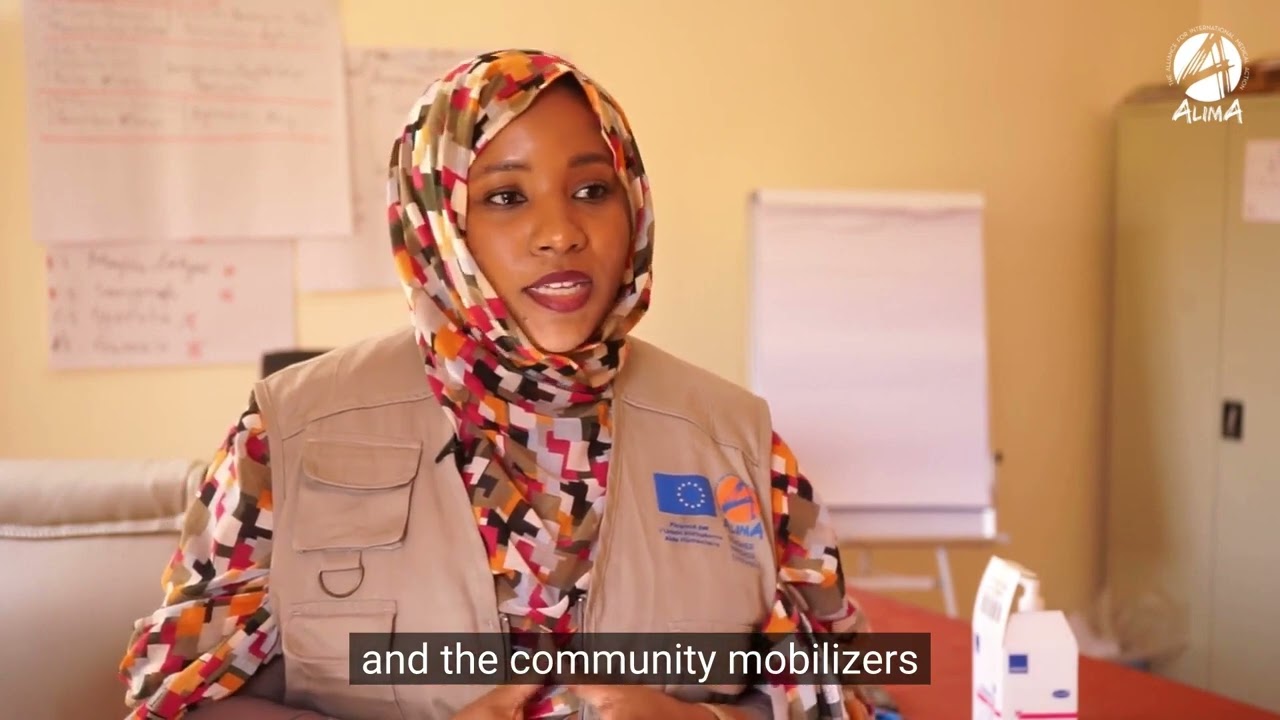
Watch a video about our vaccination campaign in action
Footnotes
*Pictures : © Seyba Keita / ALIMA ; © Zigoto Tchaya Tchameni / ALIMA ; © Daniel Beloumou / ALIMA – These activities are made possible by generous funding from the European Union (ECHO)