

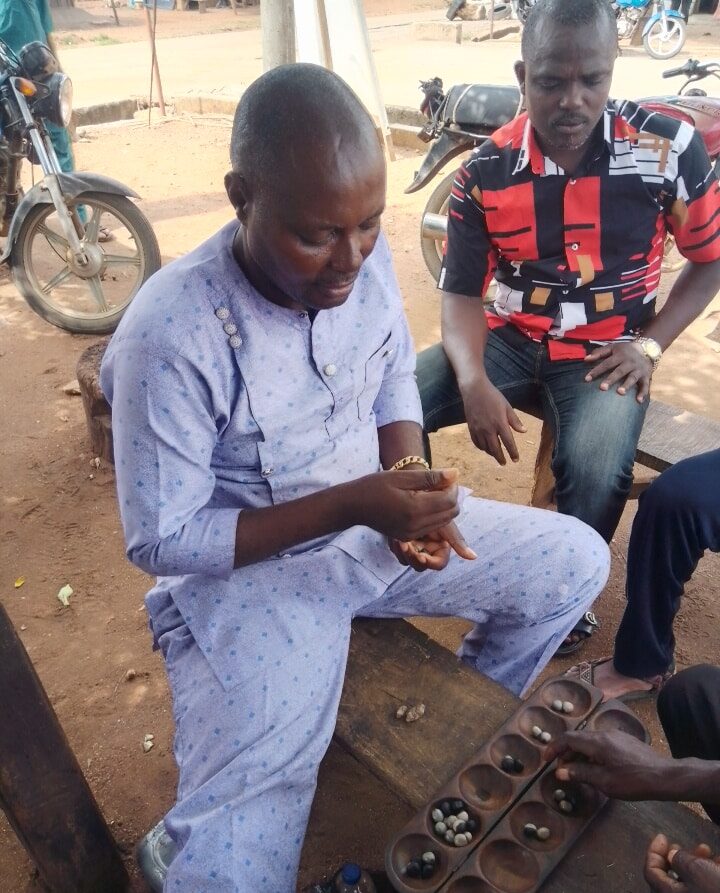
Ore Babatunde Joseph, a 48-year-old farmer from Owo, Ondo State, is married with four children. He earns a living through farming, as well as palm oil and garri production, a staple food in southwest Nigeria. Babatunde’s journey with Lassa fever began when he attended a sensitization session on the disease in his community, where he learned about its symptoms, prevention, and the importance of early treatment. At the time, he never imagined that he would one day confront the illness himself and rely on the knowledge gained to seek care. When he later fell ill, he sought treatment at a hospital near his home from where he was referred to the ALIMA supported Federal Medical Center Owo (FMCO) for further tests.
“When they told me I tested positive for Lassa fever I was scared at first because I know it is a serious disease but I had attended some information sessions on Lassa fever organized by ALIMA at Emure and Uso communities some months ago where I learned that seeking treatment early increases your chances of survival, so I was hopeful that if I got treatment early, I would survive.”
Thirty year old Augustina Mary John, on the other hand, knew very little about Lassa fever when she tested positive for the disease.
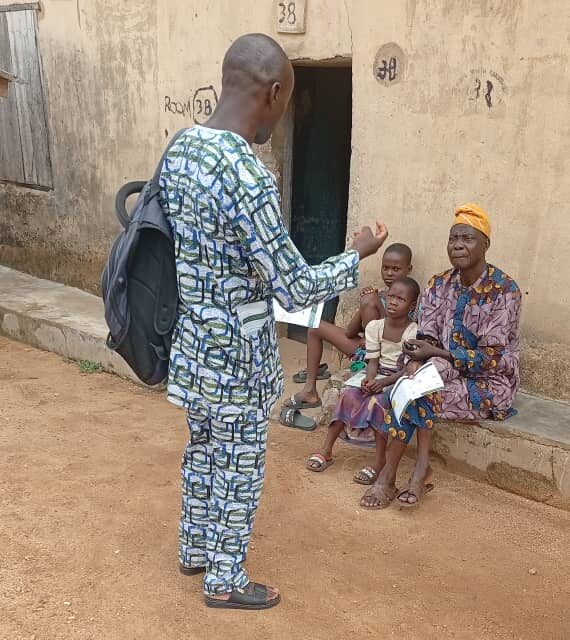
“When my test results showed I had Lassa fever, I was afraid because all I knew about Lassa fever was that it kills. I refused to go for treatment because I was scared. Then ALIMA community mobilizers came to speak to me. They explained what Lassa fever is, how it is treated, and that treatment at FMCO is free. That conversation changed my mind. When I got to the treatment center and saw how patients were being cared for, I began to believe I would survive it.”
Raising Awareness to Encourage Early Care-Seeking
At FMCO, supported by ALIMA, patients receive comprehensive care that includes close medical monitoring, supportive treatment, laboratory investigations, infection prevention measures, and counselling from healthcare workers. For many patients, the care they receive helps them navigate not only the physical effects of the disease but also the fear and uncertainty that often accompany a Lassa fever diagnosis.
In addition to treatment, ALIMA’s community outreach and health promotion activities continue to improve awareness and encourage early care-seeking.
“Many patients arrive late due to poor health-seeking behaviors which is why treatment, community sensitization, and ongoing research must go hand in hand. Every patient who arrives at the treatment centre receives individualized care from a multidisciplinary team. The earlier patients seek care, the better their chances of receiving timely treatment, preventing complications, and recovering successfully” says Dr Ihemekale Isaac, the Lead Case Manager for Infectious and Emerging Diseases, FMCO.
Between January and April 2026, more than 105 Lassa fever patients were treated at the ALIMA supported FMCO.
Improving Treatment Through Research
While loss of life can be avoided if Lassa fever is diagnosed and treated in time, new, more effective, Lassa fever treatment drugs are urgently required to improve treatment outcomes.
Coordinated by ALIMA in collaboration with the Bernhard Nocht Institute for Tropical Medicine (BNITM) and partner health facilities, the INTEGRATE project is conducting research to identify more effective treatments, including repurposed drugs that have shown promise against Lassa fever. The INTEGRATE trial is under the sponsorship of Irrua Specialist Teaching Hospital (ISTH) with the French National Medical Research Agency – Infectious Diseases and emerging diseases (ANRS-MIE) as co-sponsor.
With clinical trial sites in the country’s hardest hit regions; the FMCO, ISTH, and the recently launched Abubakar Tafawa Balewa University Teaching Hospital (ATBUTH) Bauchi, the project is conducting a platform trial to efficiently evaluate new drug candidates in line with ethical and scientific standards.

From Survivors to Advocates
Augustina and Babatunde received 12 days of comprehensive treatment and care respectively at the FMCO and recovered fully, returning to their families and their livelihoods.
Today, they use their experience to educate others in their community.
“Anyone who has symptoms like fever, weakness, and headaches should get tested,” says Augustina. “People should not be afraid to seek treatment. If they go early, they can recover.”
“My advice is that if any symptoms persist, get tested for Lassa fever. I encourage people to go for a test if they have symptoms and I tell them about my personal experience. It is always better to be sure what you are dealing with than to wait till it’s too late. It is normal to be afraid, I was afraid too despite all I know. But in the end, I received quality health care. Once you are told it is Lassa fever, run to the center on time for treatment, “ added Babatunde.
The INTEGRATE project is made possible with funding from EDCTP3.
Photos : © Love Ogundipe / ALIMA © Nandak Chingle / ALIMA


