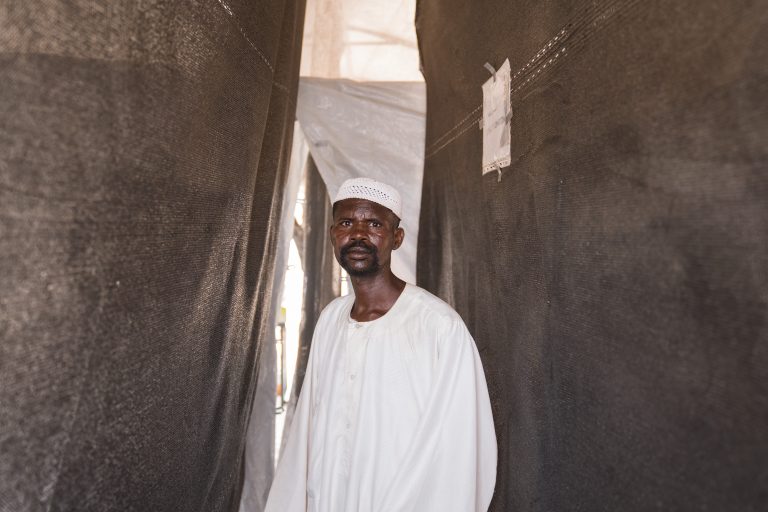
ALIMA collaborates with talented photographers, whose work reflects the reality of our actions in the field. These photographs represent moments of life, our daily work, and the interactions with our patients, their stories and backgrounds. Here, a look back at 2019.
BURKINA FASO
Nearly half a million people were displaced from their homes in Burkina Faso this year, due to an escalation of violence within the region. Many health centers have been closed or destroyed.
The United Nations estimates that some 1.5 million people are in need of urgent humanitarian aid. To help respond to the most urgent health needs in the north of the country, which has been worst affected by the conflict, ALIMA medical teams provide care to displaced populations and host communities through mobile clinics, and support local health facilities. ALIMA works alongside local NGOs SOS Médecins and Keoogo.

Cameroon
Boné, 15 months old, was admitted to the Mokolo hospital because he refused to eat. He was fed by an IV during the first few days of hospitalisation. Thanks to ALIMA’s staff, his condition improved and, after eight days, he proceeded to the transition phase of medical follow up.
In Cameroon, ALIMA trained more than 76,000 women, since January 2019, to detect malnutrition at its earliest stages in their children, through the use of the MUAC (Mid-Upper Arm Circumference) bracelet, reducing the number of hospitalisations.

Niger
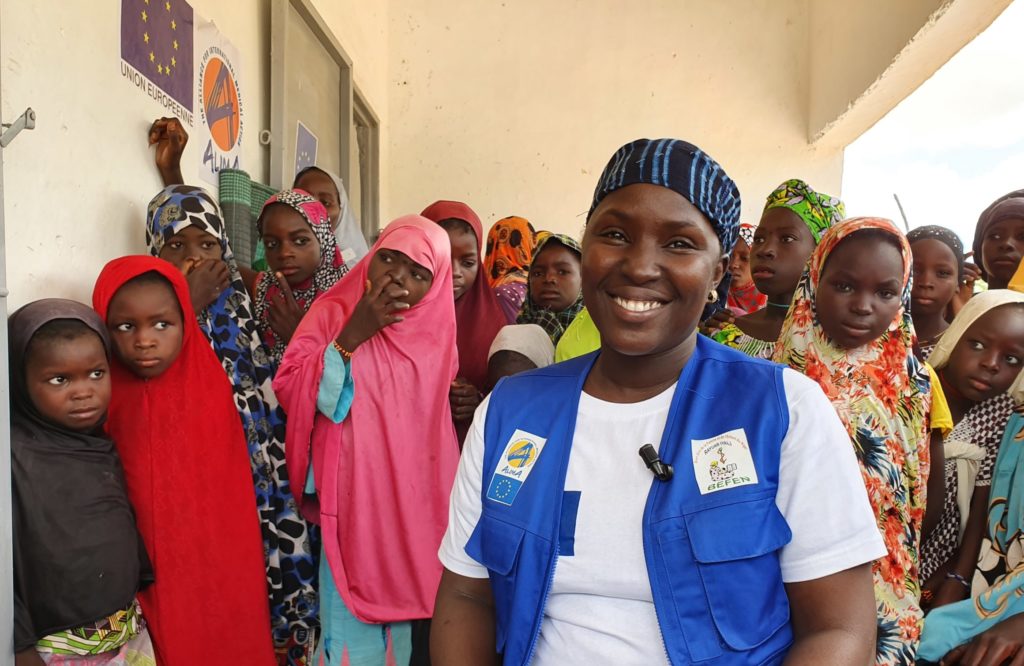
Dr. Fatoumata Binta smiles as she attends a training session for mothers on malnutrition screening. “As a woman in humanitarian work and as a mother, I don’t have any excuses for not being able to excel in the work.” Dr. Binta is ALIMA’s medical advisor on the project to fight malnutrition in Niger. ALIMA has been working since 2009 with the Nigerian NGO BEFEN (Well-being of Women and Children in Niger).
Mali
Screening to detect better: ALIMA trains mothers to screen for malnutrition using the MUAC bracelet. A simple tool that measures a child’s Mid-Upper Arm Circumference to determine if he or she suffers from malnutrition.
As a result, malnutrition is diagnosed at an earlier stage, which optimizes treatment and reduces the number of hospitalizations. ALIMA works alongside with the Medical Alliance Against Malaria – Population Health (AMCP-SP) in Mali.

Mauritania
At the Mbera refugee camp in Mauritania, which is now home to more than 58,000 displaced persons, the majority from neighboring Mali, medical needs are high. Here, a young girl waits for the news of her brother, who was hospitalized by ALIMA, suffering from respiratory distress.
The family, originally from Timbuktu in Mali, took refuge in Mauritania in 2012, following airstrikes on their village. “Our biggest worry is the security,” says their grandmother, Fadimatou.

Nigeria
For more than three years, ALIMA has been working in Nigeria alongside local health staff, supporting the rehabilitation of several health centers, coordinating patient care, and training hospital staff.
In addition, in response to annual outbreaks of Lassa fever, ALIMA helps to optimize laboratory diagnostics, protect hospital staff, and give care for patients, while supporting awareness-raising activities in the community.

Central African Republic
Nadège Karo, a midwife, resuscitates a baby at the hospital in Boda, supported by ALIMA. Since January 2019, our teams helped more than 1,200 women safely give birth. There was only one death, an incredibly low rate for this hospital, compared to the national rate in the Central African Republic.

In the Central African Republic, Alain Ai To is a driver working for ALIMA in Boda since 2014. He’s 56 years old, and always keep his warm smile throughout the journey.
“The roads here, they are not very good. Many days it is quite challenging. It can take a long time to cross a short distance, especially during the rains. But we are used to it. We keep driving, we navigate these difficult routes, because we are here to save lives.”


Democratic Republic of the Congo
Ebola is a disease we can now treat.
How is an Ebola research project carried out in a conflict zone? ALIMA, in partnership with multiple research institutions, implemented a clinical trial in the Democratic Republic of the Congo in November 2018. The objective was to identify the most effective treatment against Ebola among four promising molecules. In 2019, two of them were identified as effective against Ebola, reducing the mortality rate from 70% to 30%.


South Sudan
South Sudan is affected by recurrent food and security crises. Thanks to mobile clinics, ALIMA allows populations, far from functional health clinics, to have access to vital care
Sometimes, field teams travel hundreds of kilometres to reach these areas. Mobile clinics are used to detect diseases, such as malaria, provide prenatal consultations, detect childhood illnesses and offer free primary health care to patients.


Chad
In Chad, Moctar, eight months old, was suffering from malnutrition. After 10 days of treatment at the Chad-China Friendship Hospital in N’Djamena, supported by ALIMA/Alerte Santé, Moctar and his mother, Fatima, are happy to return home. Moctar is gaining weight and is now healthy.
“I am so happy with the treatment we have received here, and I encourage other mothers to bring their sick children for treatment as well.”

Thank you.
ALIMA thanks all our staff, partners and donors for this wonderful year and past decade, and to all our patients who shared their stories.
Footnotes
*Cover photo credit: Jennifer Lazuta / ALIMA