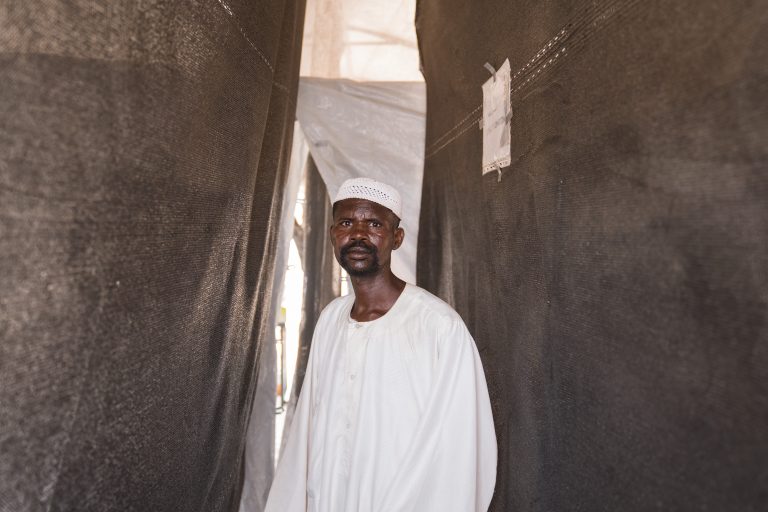
The year 2020 was marked by the COVID-19 pandemic. As early as January, ALIMA (The Alliance for International Medical Action) began preparing for possible responses to COVID-19, should it arrive in Africa. And when the first cases were reported in February, ALIMA’s teams were already on the ground, ready to launch a response. Since then, we have treated more than 6,000 patients with COVID-19, and trained more than 5,000 health workers on Infection, Prevention and Control measures and patient care.
But COVID-19 wasn’t the only crisis in 2020. In many countries, the pandemic exacerbated other medical emergencies, including malnutrition. Beyond our response to coronavirus, ALIMA was there, each day, to continue to provide free care to the most vulnerable, including children under the age of five and pregnant women. From prenatal consultations to malaria, from emergency surgery to vaccination, from Ebola to Lassa fever and beyond – ALIMA and its partners were there. And all the while, still carrying out its research projects to transform humanitarian medicine.
The following images represent ALIMA’s actions and impact this year: 12 countries, 2,000 staff, 1.3 million patients. Caring, Innovating, Together.
BURKINA FASO

Sagbo Chivanot Afavi is a medical supervisor for the ALIMA/SOS Medecins/KEOOGO consortium at the Tengandogo University Hospital in Ouagadougou, Burkina Faso, where he helps oversee the COVID-19 Treatment Center. Thanks to the work of him and his team, 237 of the 288 patients admitted to the hospital with COVID-19 recovered.
“Knowing that I can help keep patients happy is a source of pride, especially during this pandemic.”
CAMEROON

Each morning, within the tirage area at the Yaoundé Central Hospital in Cameroon, ALIMA staff welcome patients who have come to take a COVID-19 test. Here, ALIMA helped organize the flow of suspected patients and provided necessary hygiene equipment. A team of 70 local health professionals were trained by ALIMA on Infection Prevention and Control measures. By mid-July 2020, when the COVID-19 severe case management center at the Yaoundé Central Hospital closed, 268 patients had been admitted, 237 of whom were cured.
CENTRAL AFRICAN REPUBLIC

Nadine Ghislaine Bemba, an ALIMA midwife at the Boda Hospital in the Central African Republic (CAR), listens to the heartbeat of Solange Maïcro’s unborn child, during a prenatal consultation. The country suffers from the second-highest maternal mortality rate in the world – making free and accessible, quality maternal health care a necessity. In 2020, ALIMA helped more than 34,000 women give birth safely in the countries where we work.

Estella Dimanche gave birth to twins – a boy and a girl! – at the Boda Hospital in the Central African Republic. Despite carrying the twins to full-term, both were born underweight and had to be hospitalized within the neonatal unit, where they received supplemental oxygen and antibiotics. After nine days, thanks to the care of ALIMA’s team, the twins were in good health and ready to go home. Since then, Estella brings her twins twice a week back to the neonatal unit for checkups and to monitor their weight gain.
“I am very grateful to the medical team here because if it wasn’t for them, I don’t know what would have happened to me and my children.”

Aubin, a 39-year-old driver for ALIMA poses in front his vehicle at the office in Bangui, in the Central African Republic. Born and raised in Boda, a town some 190 kilometers from Bangui, where ALIMA supports health structures with primary and maternal health care, Aubin has traversed this route countless times during the past two years to help transport staff, patients and materials. During the rainy season, it can take up to eight hours to drive between the two cities. Despite the sometimes rough conditions, Aubin says:
“I am from Boda…I can drive this road because I know it very well.”
CHAD

Each year, the Chad-China Friendship Hospital in N’Djamena, Chad, experiences a peak of hospitalisations for children suffering from malnutrition. Sometimes two or three children must share a single bed. This year, given COVID safety restrictions, the Intensive Therapeutic Feeding Unit had to adapt its arrangement and distancing of beds to safely care for all sick children. ALIMA and its local partner Alerte Santé cared for nearly 22,000 children suffering from severe acute malnutrition this year, including 2,800 who required hospitalisation.

Zara Mahamat brings her three-year-old daughter Haoua for a consultation at the Intensive Therapeutic Feeding Center within the Chad-China Friendship Hospital in N’Djamena, Chad. After using the MUAC (Mid-Upper Arm Circumference) bracelet to measure her daughter each week at home, Zara suspects that Haoua is suffering from malnutrition. Zara is one of more than 47,000 mothers who were trained to use this simple, life-saving tool in Chad in 2020.
DEMOCRATIC REPUBLIC OF THE CONGO

Espérance Kavira Kavota (white bonnet), who worked as a nurse at ALIMA’s Ebola Treatment Center in DR Congo’s North Kivu province from August 2018 to June 2020, during the country’s 10th Ebola outbreak, now works at the Beni General Hospital in the operating room. Here, one of her colleagues helps her put on protective equipment, before assisting with a surgery. In Beni, ALIMA strengthened primary health care, nutrition and protection activities in seven health areas and th general hospital this year.
GUINEA

At the COVID-19 Treatment Center within the Donka Hospital in Guinea’s capital, Conakry, a laboratory technician for ALIMA prepares to test the blood sample of a patient suspected of having contracted COVID-19. ALIMA, in partnership with Guinea’s National Health Security Agency, cared for more than 4,000 suspected and confirmed patients at this facility, which is the largest case management center in the country. ALIMA also provided training to local staff on patient care, intensive care and resuscitation, and Infection, Prevention and Control. Necessary supplies, such as medications, personal protective equipment and oxygen concentrators were also provided by our organisation.
MALI

Fifteen-month-old Bintou was first admitted to an outpatient treatment program at a community health center in Commune I of Bamako, Mali, suffering from malnutrition. Despite being monitored by the ALIMA and its local partner AMCP-SP (Medical Alliance Against Malaria – Population Health), Bintou was not gaining weight. The medical teams decided to hospitalize her and she was admitted to the Intensive Nutritional Rehabilitation Unit (URENI) at a referral health center in Commune I of Bamako. In this picture, a nutritional assistant gives Bintou therapeutic milk, which is specially designed for severely malnourished children suffering from complications, who require hospitalization.
MAURITANIA

Molaye Ahmed, an obstetrics nurse, meets with her patient Lalla Marieme, for a prenatal consultation at ALIMA’ health center in Fassala, Mauritania. Lalla is nine months pregnant and so far she and her baby are in good health. Molaye, along with one of her midwife colleagues, will be there to assist Lalla when she gives birth. In addition to providing free primary health care in Fassala, ALIMA’s teams also work in the nearby town of Bassikounou and at the Mbera camp, which is now home to more than 60,000 Malian refugees. Regarding the needs of the community, Molaye says:
“There is no time to be bored here! The most rewarding part is when the delivery goes well, without any complications.”
NIGER

As part of ALIMA’s MUAC for Mothers program, mothers and other caregivers are trained to use a tri-colored bracelet to measure the Mid-Upper Arm Circumference (MUAC) of their children at home, to detect malnutrition at its earliest stages and reduce the risk of hospitalisation. Here, a mother from Mirriah in Niger’s Zinder region, explains what the green, yellow and red colors signify. The MUAC bracelet became even more important as a screening tool this year in the context of COVID-19: many families were afraid to go to health centers and mass malnutrition screening campaigns were canceled to respect barrier measures. ALIMA and its local partner BEFEN (Well-being of Women and Children in Niger) trained 113,000 mothers in 2020 to use the MUAC.
“Malnutrition is a huge problem here. If all mothers could detect malnutrition early in their children using the [MUAC] bracelet, it is a problem we can solve. This empowers us to better care for our children.”
Gagé Maazou, mother of three from Mirriah
NIGERIA

Five-year-old Hassana Hamza was brought to ALIMA’s clinic in Gula, in the Hawul Local Government Area, in Nigeria’s Southern Borno State, by her mother, after suffering from a high fever for two days. She was given a rapid diagnosis test for malaria and the results showed she was positive. Here, she receives her first treatment dose by Mrs. Hannatu, a health worker at the clinic. Hassana will continue her remaining treatments at home. In Southern Borno, ALIMA provides free health care to children under the age of five and pregnant women at five health centers in Hawul. In 2020, some 14,000 children under five benefited from consultations.
SENEGAL

At the Fann University Hospital in Dakar, Senegal, a team of health workers from the Epidemiological Treatment Center stand united as they continue to care for patients with COVID-19. In support of the response to the pandemic, ALIMA helped set up a triage circuit within the hospital, reinforced Infection, Prevention and Control measures, supported patient care and donated life-saving supplies, including oxygen concentrators, which are vital for those patients suffering from respiratory distress.
“When you have a patient in a very difficult situation, who recovers, it is heart-warming. It gives us the strength to get through tough times and have hope for other patients.”
Dr. Boly Ameth Niang, Head of patient care at the COVID-19 Epidemic Treatment Center (pictured above, second from the right)

A health worker prepares to enter into the “red zone” within the COVID-19 unit at the Epidemiological Treatment Center in Fann University Hospital in the capital city, Dakar. Inside this zone, health workers are in contact with patients who tested positive for the disease, and must wear full protective gear to protect themselves from possible infection. More than 600 patients were admitted to the ALIMA-supported COVID-19 treatment centers in Dakar and Yeumbeul this year for care.
SOUTH SUDAN

Matoyo Akot Deng, a nurse, prepares a vaccine at ALIMA´s Riang Makuei mobile clinic site in the Aweil region of South Sudan’s Northern Bahr el Ghazal State. Since 2017, ALIMA has been operating mobile clinics in Aweil to provide primary health care to communities who lack access to health care. Services include vaccination campaigns, malaria testing and treatment, prenatal consultations and malnutrition screenings.
“Mobile clinics developed as a strategy to respond to limited access to healthcare, to enhance access, to provide quality care…to get closer to communities with the mobile clinics, because access to healthcare is a big challenge here.”
-Dr. Simon Deng Garang, ALIMA mobile clinic doctor
THANK YOU!
ALIMA would like to thank its teams in the field, its partners, its donors, the photographers, and all the patients who shared their stories.
Footnotes
Cover photo: © Jean – Bernard Senat / ALIMA