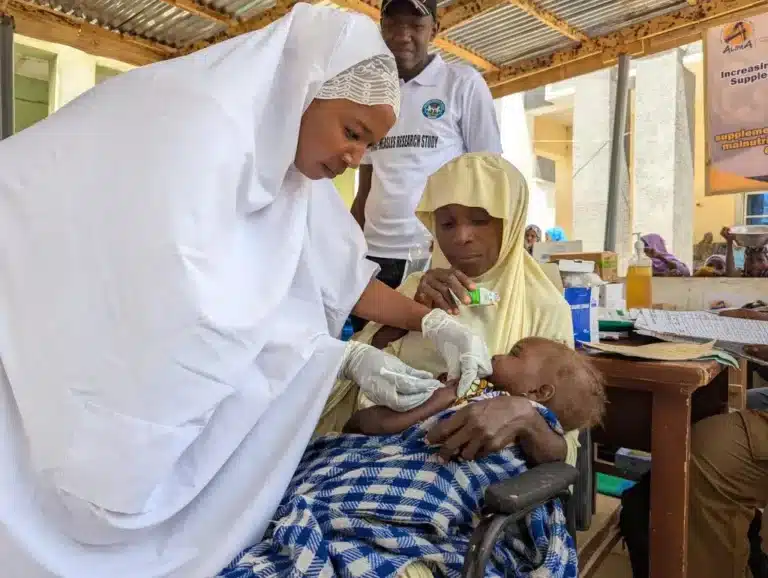
« I noticed my child was losing weight, so I came to the hospital right away », says Catherine, 19, mother of baby Cécile.

Catherine lives in a village nearly two hours by road from Mokolo Hospital, in Cameroon. In this region, long distances, insecurity, and poverty make it hard to access healthcare, especially for mothers and newborns. After giving birth at Mokolo Hospital, she went home. Two weeks later, something worried her: her baby was getting thinner. She made the journey back to the hospital.
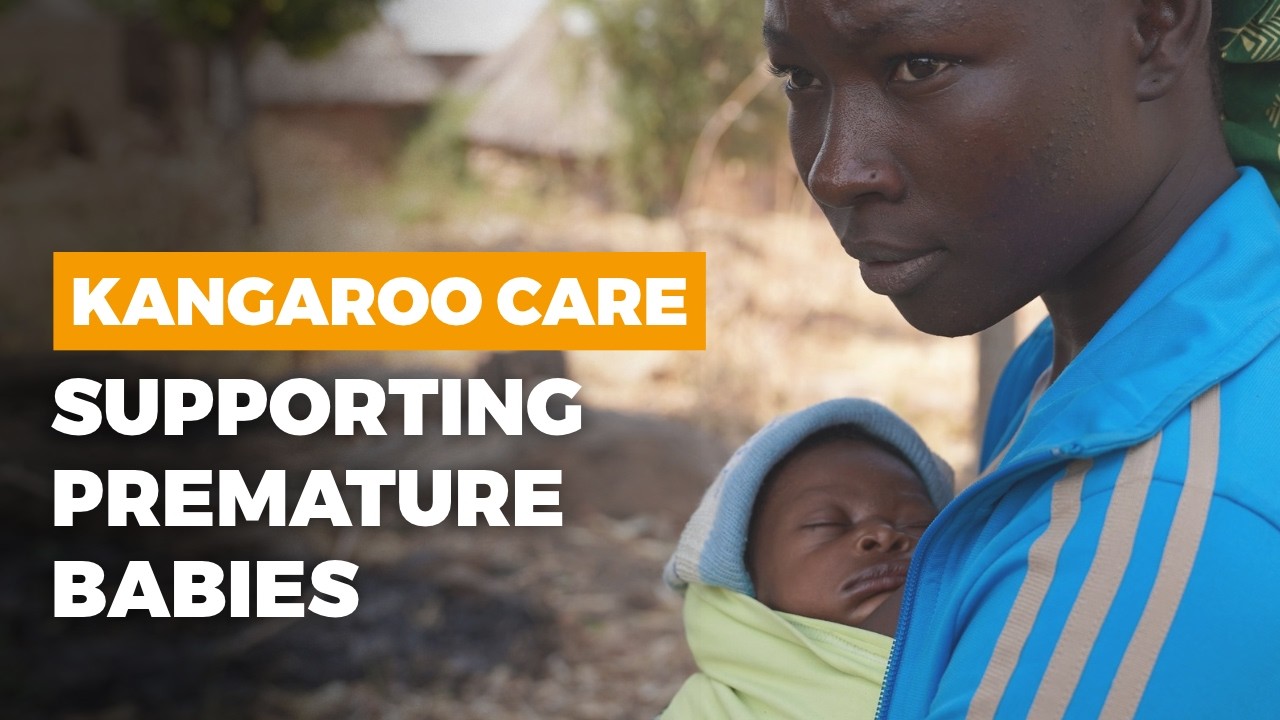
Kangaroo mother care: simple and accessible
For babies born prematurely or with a low birth weight, the first days of life are critical. That is what kangaroo mother care aims to protect: the newborn is held skin-to-skin against the mother for several weeks, for 8 to 24 hours a day, depending on the baby’s birth weight, until the baby reaches 2,500 grams (around 5.5 pounds). This prolonged contact regulates the baby’s temperature and supports growth.


In the neonatal unit at Mokolo Hospital, mothers practice kangaroo mother care. Mokolo Hospital, Far North region, Cameroon. © Cora Portais / ALIMA
«The kangaroo approach allows us to care for premature and low-birth-weight newborns through prolonged skin-to-skin contact between the baby and the mother, to prevent complications, such as hypothermia, infections, or breathing difficulties», explains Souleymane Samake, outgoing Project Coordinator in Mokolo.
One of its strengths is its accessibility. «t’s an accessible technique that requires no additional expense. The mother simply needs to be informed and supported so she understands the importance of the method and applies it correctly»,he adds.
In Mokolo, healthcare teams teach mothers how to practice skin-to-skin and prepare them to continue the method once they return home. Catherine first learned about the method here: « Here, we practice kangaroo care, and I can see that it’s working.»
Going home, a new stage
After several days in hospital, Catherine returns to her village with Cécile. Leaving the unit does not mean the care stops. The method now has to fit into daily life, alongside household chores and family life.
« When I got home, they told me to keep up kangaroo care, and that’s what I’m doing» ,she explains.

A family affair
At home, Catherine is not alone. Her sister-in-law, Madeleine, takes over skin-to-skin care when Catherine is busy.
« When I’m busy with housework, I have someone who helps me: my sister-in-law. She takes over», says Catherine.
Madeleine was involved from the start at the hospital: « We were together from the time we were at the hospital. The baby was doing well, so they discharged us. We were told to practice this method. When my sister-in-law is busy with other tasks, I take over.»
Community healthcare workers, the link between hospital and home
After returning home, support continues for several weeks. Community healthcare workers visit families to connect the hospital, the home, and the people supporting the mother.


Portrait of Abraham Ngacebaï, Health Promotion Supervisor, visiting Catherine and her daughter Cécile at their home. Mokolo, Far North region, Cameroon. © Cora Portais / ALIMA
« The role of community healthcare workers is to come, closely monitor, and explain to the family, the mother-in-law, the father-in-law, and everyone around her, so they understand the benefits of the kangaroo mother care approach», explains Abraham Ngacebaï, Health Promotion Supervisor.
Working with the wider family responds to a very real need:
« Staying with this baby for hours on end is exhausting for the mother»,
he notes. Sharing skin-to-skin helps families maintain the practice over time.
Practicing kangaroo mother care beyond the hospital walls
For Catherine, kangaroo mother care began at the hospital and continues at home. With support from her family, visits from community healthcare workers, and follow-up from the health teams, Cécile continues to grow, surrounded and protected.

« Since it was introduced in Mokolo, kangaroo mother care has significantly reduced newborn mortality. The proportion of deaths among premature and low-birth-weight babies fell from 78% in 2024 to 21% in 2025 »
says Souleymane Samake, outgoing Project Coordinator in Mokolo. Prematurity and low birth weight are no longer the leading causes of death in the neonatal unit of Mokolo’s regional annex hospital.
In Mokolo, this chain of support allows the most vulnerable newborns to receive the care they need, well beyond the hospital walls.
This project is carried out with the support from the support of the French Development Agency (AFD).
Photos © Cora Portais / ALIMA