Joining Forces as Quickly as Possible to Address the Outbreak
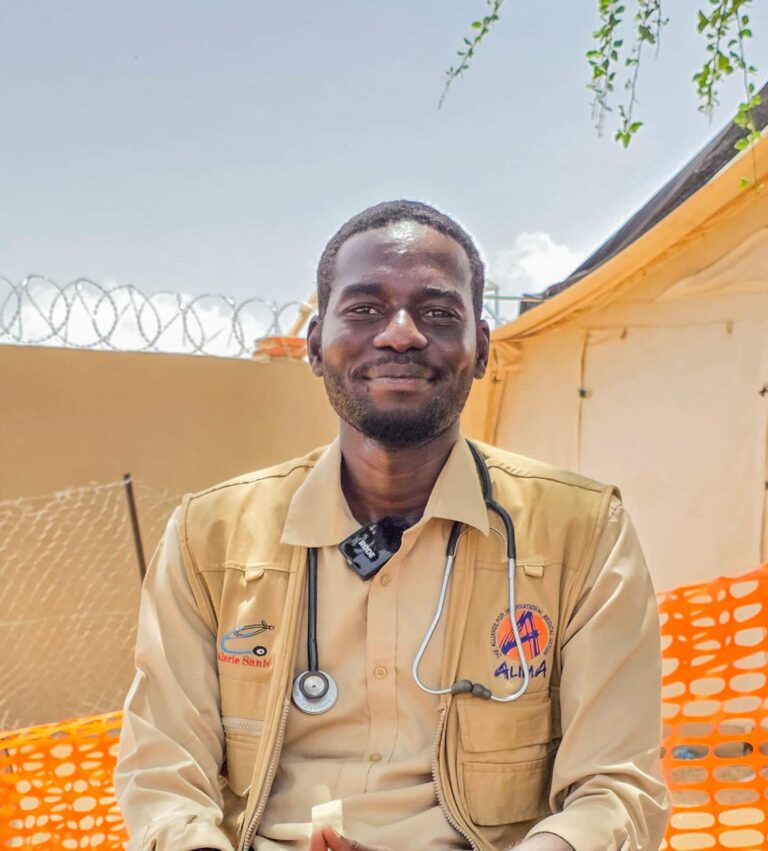
At the start of the response in September, palm trees and tall yellow-flowered rain trees stood alongside humanitarian tents in the villages of Bulape and Bambalaie. At the end of August, when a new outbreak was declared in the Kasai region in central DRC, the Ministry of Health immediately mobilized all actors to respond: its own teams, local doctors, international NGOs including ALIMA, and community health workers.
This disease has an extremely high mortality rate: 64% of infected patients died during this outbreak. From the very first days of the response, a race against time began to identify contacts, treat patients, and protect both the population and healthcare workers as quickly as possible.
Thanks to its strong local presence in the DRC, where the majority of humanitarian staff are Congolese, ALIMA was able to respond very quickly. Teams already on the ground played a key role based on three main pillars:
- Medical care, through the establishment of Ebola triage, transit, and treatment centers;
- Prevention and surveillance, including epidemiological monitoring, healthcare worker training, and support for vaccination efforts;
- Community engagement, through awareness-raising, training of community health workers, and psychosocial support for patients and their families.
“I Never Thought I’d Make It Out Alive”
Jeannine has been bedridden for several days. She is suffering from headaches, vomiting, fever, and diarrhea. Isolated, she fears she may be infected with Ebola. One day, from her window, she hears community health workers raising awareness and advising people to go to the health center if symptoms appear. With her remaining strength, she decides to get up and slowly walk to ALIMA’s Ebola transit center, where she is admitted and treated.

“I was reunited with my family and saw my mother, who welcomed me warmly. I was very happy to see my children again. Since my discharge, I haven’t yet regained all my strength. I mostly feel tired and I’m not able to go into the forest to gather food. I thank the healthcare workers because I never thought I’d make it out alive.”
Jeannine was cared for by local doctors trained by ALIMA in the management of Ebola patients, including the organization of care zones, protection protocols, and treatment procedures.
A Decisive Relay of Actors Throughout the Race
Throughout the three months of the outbreak, ALIMA worked closely with community members to raise awareness about the importance of seeking care, isolating infected individuals, and encouraging the adoption of protective measures.

“We worked with community health workers to restore a positive image of health centers. When we arrived, the population was very afraid. The outbreak was contained in three months thanks to the efforts of all actors, especially local doctors, community health workers, traditional leaders, and above all the population, who were highly involved.”
Traditional leaders also played a crucial role in encouraging sick people to seek care at health centers.

“At first, we were all afraid of this disease. People feared being rejected or infected. With ALIMA, we encouraged the population to come to the health center. After our training, we explained the preventive measures and new behaviors to adopt, such as no longer gathering in groups or touching the bodies of the deceased.”
Psychosocial care is also fully integrated into the response.

“Mental health disorders are often associated with witchcraft or mystico-religious beliefs. As a result, they are usually handled by churches in the DRC. We therefore took this reality into account by raising awareness among religious leaders so that they would refer people in need to our health centers.”
At the Finish Line: Victory Over the Outbreak
When Ebola enters homes in Kasai, fear is overwhelming. Contact cases multiplied, and 45 people lost their lives. The remoteness of villages, the speed at which the virus spreads, and the fear of seeking care were all major obstacles. Faced with these challenges, a collective effort came together to address the outbreak. Thanks to rapid action, the alliance of medical expertise, and strong community engagement, the epidemic was brought under control in just three months.
Today, ALIMA continues its work in Kasai by strengthening capacities to sustainably support local medical teams and better prepare responses to future health crises.


This response was funded by Start Fund.