On May 15, 2026, health authorities in the Democratic Republic of the Congo officially announced a new Ebola outbreak in Ituri province, in the northeast of the country. This is the 17th Ebola outbreak recorded in the DRC. Two days later, the World Health Organization classified the outbreak as a public health emergency of international concern.
The outbreak is affecting several health zones, including Bunia, Mongbwalu, and Rwampara in Ituri province, near the borders with Uganda and South Sudan. This region experiences significant population movements due to mining activity, trade, and persistent insecurity. In recent days, cases have also been reported in the neighboring province of North Kivu, notably in Goma, Beni, and Butembo, as well as in Uganda. As a result, the outbreak has already spread beyond Ituri and the DRC. In total, 12 health zones are now affected: 9 in Ituri province and 3 in North Kivu. Health authorities are warning of a high risk of further transmission.
According to data released by the DRC Ministry of Health as of May 18, 2026, 401 suspected cases had been reported, including 303 in Ituri, along with 9 confirmed cases and 107 deaths. These figures, which are evolving rapidly, reflect the seriousness of the situation.
ALIMA’s rapid mobilization
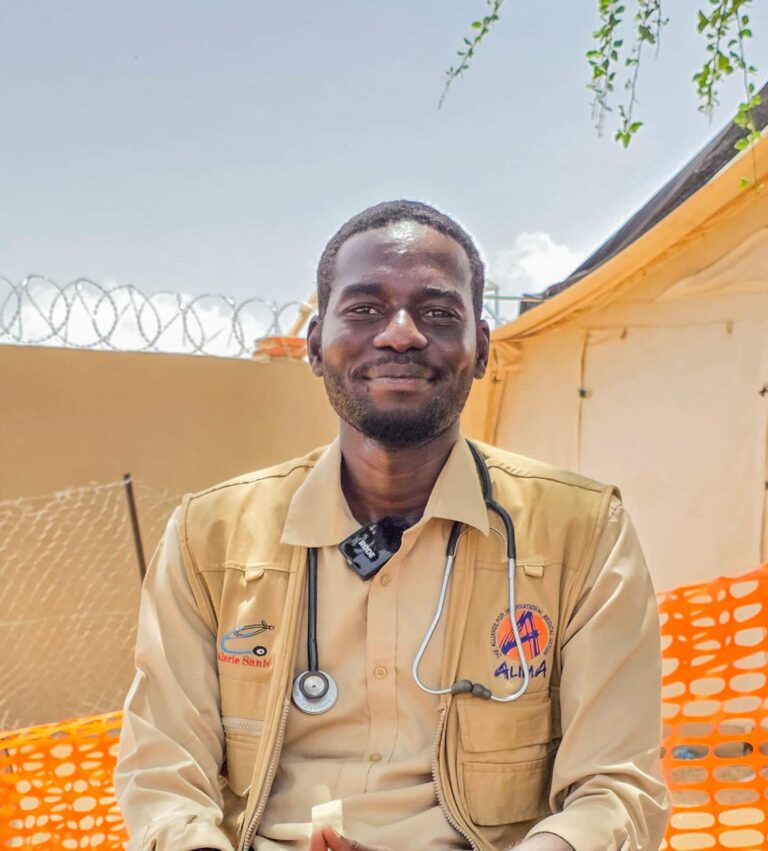
Alongside Congolese health authorities, the WHO, and other mobilized actors, ALIMA is contributing to investigations and preparing to deploy a response in the affected areas.
An ALIMA team is already present in Bunia as part of its regular activities. At the same time, a first emergency team of 7 experts — doctors, nurses, and logisticians — is on its way to strengthen support to the DRC Ministry of Health.
ALIMA has also mobilized protective equipment, medical supplies, medicines, and CUBEs. These innovative biosafe care units created in 2014 by ALIMA make it easier to treat patients while improving the protection of healthcare workers. The equipment is currently being transported to Bunia from Goma and Kinshasa.
This mobilization is part of ALIMA’s continued commitment to responding to Ebola in the DRC, following its intervention in Kasaï in 2025.
A particularly concerning outbreak
This new outbreak is caused by the Bundibugyo variant, a rare Ebola strain previously observed during two outbreaks in Uganda and the DRC. Earlier outbreaks linked to this strain had an estimated case fatality rate of between 30% and 50%.
Unlike the Zaire strain, for which vaccines and treatments exist, no approved vaccine or specific treatment is currently available against the Bundibugyo strain. The response relies primarily on rapid case detection, medical care, infection prevention and control, and community acceptance of public health measures.
In the early days of an outbreak, fear, the spread of rumors, and the time needed to build acceptance of certain measures can slow the response. Community trust and access to clear information are essential to containing the spread of the virus.
Immediate medical, logistical, and financial needs
Responding to an Ebola outbreak requires considerable resources. Specialized teams must be deployed quickly, specific protective equipment transported, and safe care facilities set up. Awareness-raising and protection measures must also be strengthened as close to communities as possible.
In Ituri, these needs are further intensified by security constraints, difficulties accessing certain areas, and population mobility, all of which can facilitate the spread of the virus.
The coming days will be critical in slowing the outbreak, caring for patients, and preventing wider transmission.
Present in the DRC for many years, ALIMA has proven experience in epidemic response after helping to end last fall’s Ebola outbreak, also in the DRC. ALIMA has also contributed to responses to outbreaks across Central, West, and East Africa, including in Uganda, Rwanda, and Ethiopia, and assisted in creating the only known vaccination.
Today, it is mobilizing alongside health authorities to help contain this new Ebola outbreak.